第一列
The Tamsui railway line began steam train service in August 1901 (Meiji 34), with only five stations: Taipei Station, Yuanshan Station, Shilin Station, Beitou Station, and Tamsui Station. The convenient transportation brought increasing numbers of visitors to bathe in Beitou's hot springs, which in turn drove the growth of surrounding hotels.
In the autumn of 1910 (Meiji 43), Taipei Prefect Imura Daikichi, aiming to transform Beitou into a major recreation area, first planned the construction of the "Beitou Hot Spring Public Bathhouse." In June 1913 (Taisho 2), upon the bathhouse's completion, Beitou Park was also built, marking an epoch-making transformation of the Beitou area.
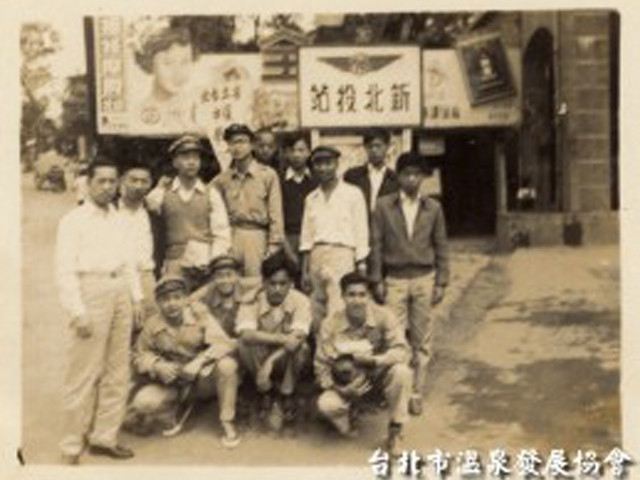
In 1915 (Taisho 4), to meet growing demand for hot spring tourism and recreation in Beitou and the Datun Mountain area, the Japanese government built a railway branch line from Beitou Station to the hot spring district. The Xinbeitou branch line, commonly known as the "Bathhouse Line," was completed on April 1 of that year. Six "steam cars" were gradually added to service, and Xinbeitou Station was established so travelers could ride directly from Kitamon Station (discontinued in 1923) to Xinbeitou. This further promoted the prosperity of the Beitou area. The station was located at the entrance of Beitou Park and was initially called "Xinbeitou Stop," later renamed "Xinbeitou Station." From then on, the place name "Xinbeitou" came into being. Located in suburban Taipei with convenient transportation, Xinbeitou gradually developed into one of the most important hot spring recreation areas in northern Taiwan.
The architectural style of the first-generation Xinbeitou Station was quite similar to Kitamon Station, which was completed about eight months earlier. In 1937, the Xinbeitou station building was expanded by one-third to the north following the original design. The rebuilt station, being a branch line terminus rather than a through station, was designed in a T-shape: the horizontal bar representing the station building and the vertical bar representing the railway tracks and platform, intersecting at a ninety-degree angle. No major changes were made after this reconstruction until the building was eventually demolished.