第一列
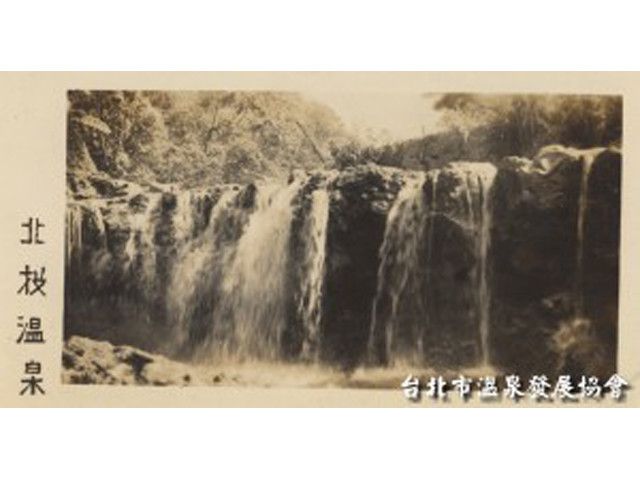
The name "Beitou" means "witch" in the Ketagalan indigenous language, while "Pattsiran" means "hot spring." This shows that the indigenous Ketagalan people were already aware of the hot springs, though details of their use remain unknown.
Since the 17th century, records about Beitou have focused primarily on sulfur mining, with hot springs regarded as "toxic water."
For example, 17th-century Dutch documents recorded: "Near the mouth of the Tamsui River... in the quite hot and foul-smelling middle reaches, sulfur flows down. The climate is unhealthy, and Dutch soldiers often died of illness." In 1717, Ruan Caiwen wrote: "...At Beitou in north Taipei, sulfur gas erupts skyward, the spring flows like boiling soup, and fish and shrimp that touch it die..." In 1918, Lian Heng's General History of Taiwan recorded: "Sulfur is produced in Tamsui, in what is now Beitou. When the Spanish occupied Taiwan, they mined it, but the miasma was rampant, insects bred, and the water was foul. Many workers fell ill..."
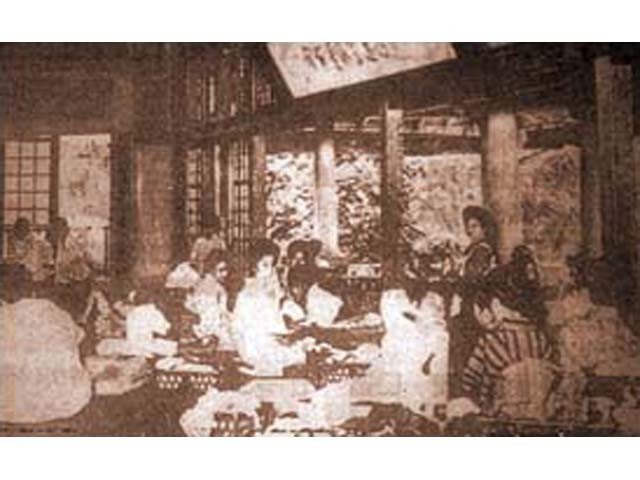
The commercial development of Beitou Hot Springs began in 1896. Osaka native Hirata Gengo first established the Tengoku-an Inn, introducing hot springs into commercial use. In August of the same year, Matsumoto Kametaro, the financial officer of the Taipei Military Government, also opened the Shotouen Inn in Beitou. Subsequently, various hotels and inns mushroomed throughout the Beitou hot spring area. These establishments offered not only hot spring baths but also other services, with geisha and hostess entertainment being a particularly important component.
Hot spring inns were not accessible to ordinary people. Early Japanese-run inns served mainly Japanese customers, while Taiwanese-run inns mainly served clients from central and southern Taiwan visiting Taipei on business. Local Beitou residents and general Taipei citizens rarely patronized these establishments. Instead, Beitou residents used naturally emerging hot springs, enjoying open-air bathing along Beitou Creek and other spring outlets, where makeshift bathing facilities gradually appeared. In November 1905, Hasegawa Kinsuke, advisor to the Taiwan Women's Charitable Society, established a Bathhouse Improvement Association to channel hot spring water from the Datun Mountain springs into a hygienic public bathhouse for the general public. In August 1906, over 6,000 feet of hot spring pipes were completed, ensuring water temperature and quality. A new public bathhouse was opened to the public, and surrounding land was purchased and developed into an attached recreation area.
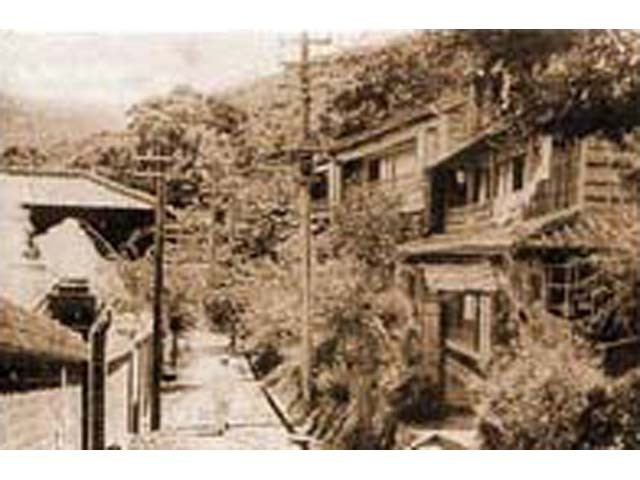
Meanwhile, road and infrastructure construction was also essential. In the early days, reaching the Beitou hot spring area required walking through several streets from Beitou Station, climbing hillside roads, and winding around to the mountain base to reach the Takiyu bathhouse. The difficulty of access was a major inconvenience for visitors. To improve access, business owners petitioned the Navy to allow construction of a new road through naval land. Construction of the road and bridges began in March 1907. Mr. Murakami of the Railway Department supported the project and donated timber for the bridge, and construction was completed within the month. Unfortunately, heavy rains that year washed the bridge away. A temporary earthen bridge was built, but it too was damaged by rain and became impassable.
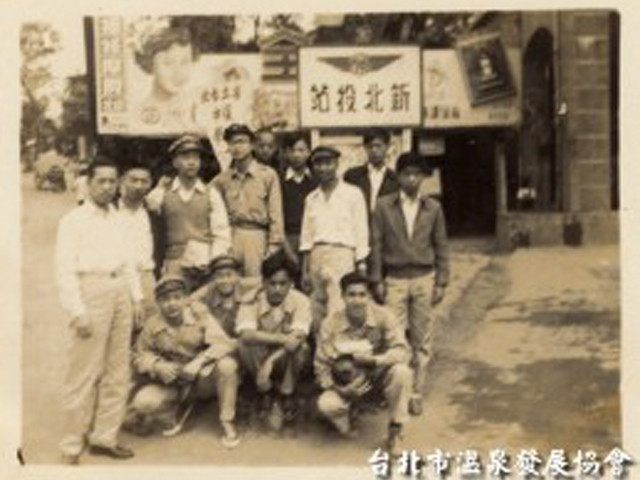
In 1908, through the efforts of Taipei Prefect Kato and Mr. Murakami, the Taiwan Women's Charitable Society donated 1,000 yen. That same year, the impressive public bathhouse at Takiyu hot springs was completed, making bridge construction even more urgent. Through the mediation of Kato Hisashi, Yamashita Hidemi donated 200 yen for bridge construction. Following Murakami's advice and learning from past bridge failures, the construction was designed to be as sturdy as possible. Under the supervision of Railway Director Niimoto Shikanosuke, construction began at the end of February 1909, and a solid bridge was completed on March 17. Beitou residents were deeply grateful to Prefect Kato and others for their support. The bridge was named "Minori Bridge" after a character in the donor Yamashita Hidemi's name, as a memorial.
After the road opened, the bus company began planning routes running Taipei to Caoshan (Yangmingshan) to Beitou and back, making hot spring visits much more convenient. Tourists from all over could now easily reach Beitou Hot Springs and enjoy the bathing experience.
To showcase the achievements of the Taiwan Governor-General's administration, the government had long planned to invite Crown Prince Hirohito to visit Taiwan. In preparation for his arrival, the Taipei Prefecture invested enormous funds in the Beitou hot spring area. First, in 1913, with the approval of Taipei Prefect Imura Daikichi, 56,000 yen was spent to renovate the Takiyu bathhouse into the Beitou Hot Spring Public Bathhouse. Modeled after the Izusan Onsen in Shizuoka Prefecture, Japan, the two-story building featured brick construction on the first floor and wooden construction on the second, making it the most renowned and largest public hot spring bathhouse in all of Japan at the time. Simultaneously, the surrounding area was developed into Beitou Park, arguably the most impressive park in Taiwan at that time. In 1916, a railway line from Beitou to Xinbeitou was added for easier access. In 1934, a bronze bust of Imura Daikichi was erected in Beitou Park to honor his contributions.
With major government involvement, various organizations also moved into Beitou, viewing it as a leisure area. Recreation centers, guesthouses, villas, and temples were built, further enhancing Beitou's distinctive character.
Overall, during the Japanese colonial period, Beitou Hot Springs had developed all the characteristics of a fully-fledged hot spring town: high-quality services from hot spring inns, affordable public bathhouses, excellent park facilities, convenient railway and road transportation, and environmental regulations protecting the natural ecology. These elements allowed Beitou to fully serve the tourism and leisure needs of visitors from all walks of life, both domestic and international, fostering a rich hot spring culture.